

Fix Your Ring Muscle-Up: False Grip Mechanics That Protect Your Wrists and Elbows
Why Your Ring Transition Is Destroying Your Elbows
The ring muscle-up is not a test of how violently an athlete can throw the body over the rings. That common approach, using maximum swing and a desperate pull, hides weak positions until the turnover exposes them. The center of mass must travel from below the rings to above them, which is why the transition is widely considered the most technically demanding part of the movement. A useful overview of the movement”s history and mechanics can be found in this overview of the muscle-up. Pure pulling strength helps, but it cannot replace precise wrist, shoulder, and elbow coordination.
When the turnover is forced, the elbows often flare while the wrists collapse backward. That combination can create a sharp load on the medial elbow, particularly around the common flexor tendon near the medial epicondyle. The problem may begin as irritation during the transition and develop into persistent pain when the same faulty repetition is repeated under fatigue. A strict false grip changes the mechanics. It gives the athlete a stable connection to the rings, keeps the hands prepared to rotate over the apparatus, and allows the shoulders to move forward without making the elbow absorb the entire change in direction.
Anatomy of the False Grip and Connective Tissue Remodeling
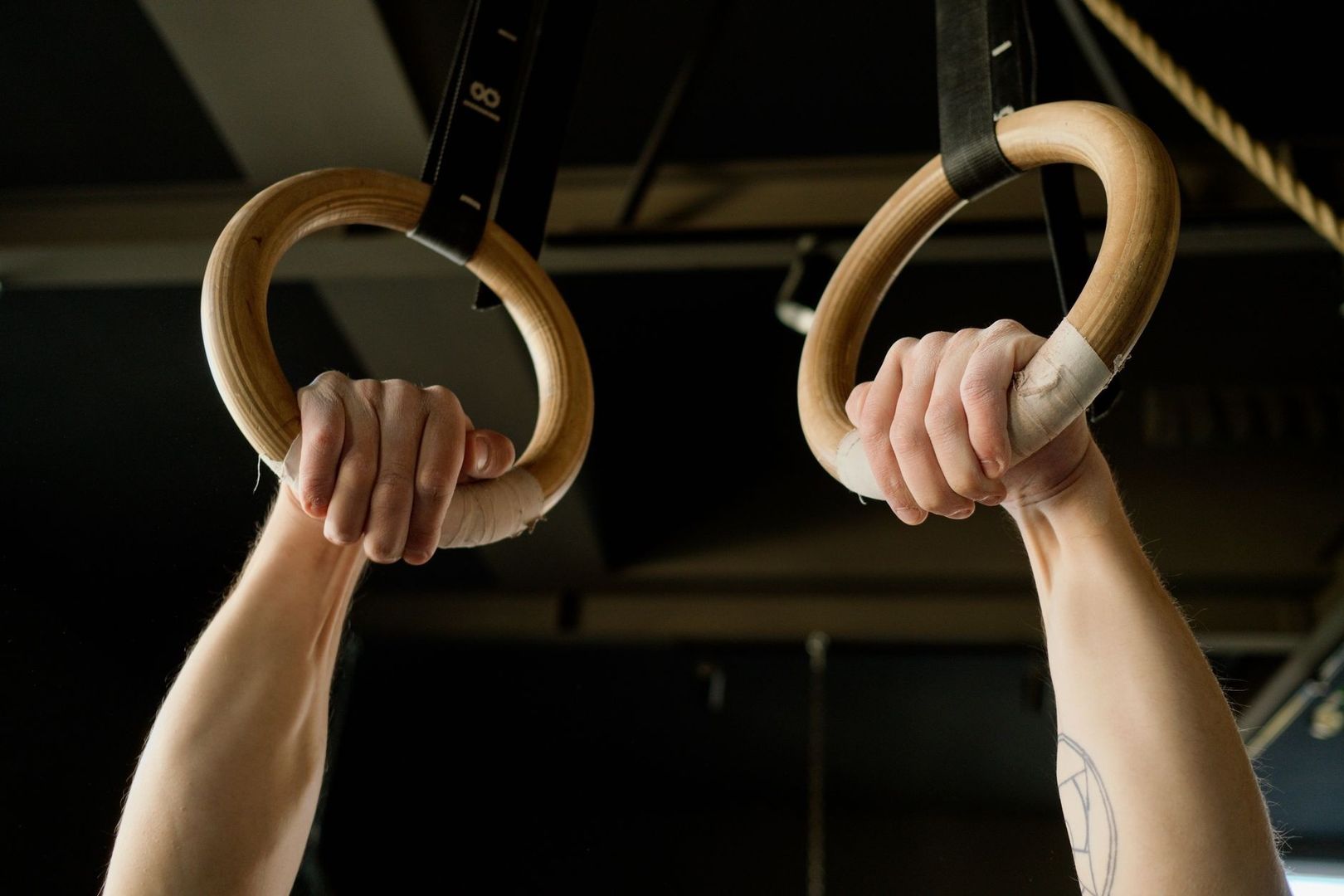
A false grip places the wrist in flexion so the lower palm and pisiform region sit directly over the ring rather than allowing the ring to rest only in the palm. The hand should wrap firmly, with the wrist actively curled and the knuckles controlled. This position shortens the distance between the forearm and the ring, making the turnover more efficient. It is not simply a matter of tolerating pressure on the wrist. The goal is to create an active connection that remains stable while the lats, forearms, and trunk transfer force into the rings.
Muscle strength often improves faster than tendon capacity. A few weeks of hard pulling may make the forearm flexors feel stronger, while the connective tissues at the wrist and medial elbow still require gradual exposure to load. No universal timeline guarantees tendon adaptation, so progress should be judged by tolerance, control, and recovery rather than by the calendar. An Authoritative Source can provide broader medical context for how tissues respond to injury and rehabilitation. Repetitive tensile overload without adequate preparation is associated with chronic medial elbow problems, including golfer”s elbow pathology, as described in this clinical reference on medial epicondylitis.
Active wrist flexion is the key distinction. The athlete should feel the forearm working to maintain the shape, not merely allow the wrist to fold under body weight. Passive collapse shifts stress into the joint and concentrates strain near the flexor tendon origin. Useful preparation can include controlled wrist mobility, forearm mobilization, and low-load false-grip practice. Coaches working with adult athletes commonly emphasize scaled gymnastics exposure and deliberate progressions rather than forcing advanced ring skills before the tissues are ready.
- Keep the wrist flexed before loading the rings.
- Maintain a firm hand connection instead of gripping only with the fingers.
- Stop or scale the drill if sharp wrist or medial elbow pain appears.
- Increase duration and volume gradually, never both aggressively in the same session.
The Progressive Loading Ladder for Resilient Wrists
Begin on the floor, where the wrists can be prepared without the full demand of bodyweight suspension. Use gentle wrist circles, palm-supported rocks within a comfortable range, and forearm flexor and extensor movements. Mobility should create usable range, not chase an intense stretch. Follow the mobility work with short active false-grip contractions, pressing the heel of the hand toward the floor while maintaining a controlled wrist curl. This teaches the athlete to own the position before adding external load.
The next step is a feet-assisted false-grip hang. Set the rings low enough that the feet remain on the floor, then lean back while keeping a portion of the bodyweight supported through the legs. Hold the false grip for brief, high-quality intervals. As tolerance improves, reduce assistance or increase the time slightly. False-grip ring rows and low-ring transitions are valuable because they combine tendon exposure with movement-specific control. Bands can also reduce bodyweight demand while allowing the athlete to rehearse the transition without jerking.
Volume must be dosed like strength training, not treated as casual wrist conditioning. A few controlled sets performed well can build capacity; repeated failed attempts create unnecessary microtrauma. Leave several quality repetitions in reserve, rest fully between sets, and schedule recovery before the next demanding false-grip session. Persistent soreness at the wrist or medial elbow is a signal to reduce loading and seek qualified clinical assessment, not a challenge to push through.
- Prepare the wrists and forearms with controlled mobility and activation.
- Perform feet-assisted false-grip holds for short, repeatable intervals.
- Add false-grip rows and low-ring transitions before full bodyweight attempts.
- Progress from thicker band assistance to lighter assistance only when mechanics remain clean.
- Use negatives sparingly, lowering through the transition under control rather than dropping into the bottom.
Mastering the Ring Turnover Without Jerking or Flaring
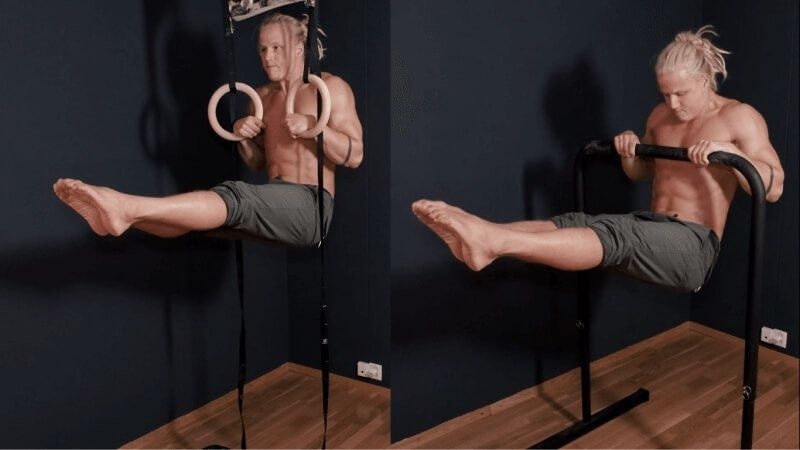
The transition starts before the athlete reaches the rings. Pull high, aiming the rings toward the sternum while keeping the elbows close to the torso. The rings should stay close to the body rather than drifting forward. When the rings remain near the chest, the shoulders can move over the hands with less disruption. A strong L-sit or slightly raised-leg position during the pull can help maintain trunk control. As the shoulders travel forward, lowering the legs creates a useful counterbalance without relying on a violent kip.
Asymmetric elbow flare is one of the clearest signs that the turnover is being forced. One elbow may open earlier, causing one shoulder to rotate ahead of the other and placing uneven stress through the wrists and medial elbows. Keep the rings at a consistent width and imagine driving both elbows backward at the same rate. The objective is not to pin the elbows unnaturally to the ribs, but to prevent them from escaping wide while the chest approaches the rings.
Use drills that preserve constant wrist flexion as the center of mass moves over the apparatus. Low-ring transitions with the feet assisting can isolate the shoulder shift. High false-grip pulls can teach the elevation needed before the turnover, while slow deep ring dips build the receiving position. Band-assisted muscle-ups are useful when the band reduces enough load to let the athlete practice the complete sequence without snapping through the weakest point. Quality matters more than repetition count. If the wrists open, the elbows flare, or the athlete drops into the dip, the progression is too difficult.
| Technical focus | Common fault | Coaching correction |
|---|---|---|
| Ring path | Rings drift away from the chest | Pull the rings toward the sternum and keep the body tight |
| Elbow position | One or both elbows flare wide | Maintain even elbow travel and reduce assistance if control improves |
| Wrist position | False grip collapses under load | Return to feet-assisted holds and rebuild active wrist flexion |
| Shoulder shift | Athlete stays behind the rings | Move the shoulders forward gradually before pressing into the dip |
A Weekly Protocol for Sustainable Strength and Joint Armor
Place false-grip work early in a session, before fatigue from high-repetition pulling, pushing, or conditioning. Begin with dynamic wrist preparation, then perform a few short activation sets. The intent is to rehearse the connection, not exhaust the forearms. Two or three low-volume exposures per week may be enough for many athletes, especially when ring dips, pull-ups, and other gripping work are already present in the program.
Transition drills should be low-frequency and high-intent. Perform assisted transitions, high pulls, or controlled negatives while every repetition still looks the same. Save demanding metcons for after the technical work, because fatigue encourages wrist collapse and elbow flare. Finish selected sessions with light, controlled eccentric forearm work, such as slow wrist-flexion and wrist-extension lowering. This can support gradual loading of the forearm tissues, but it should remain modest and should not be used to punish painful joints.
- Prepare with wrist mobility, forearm activation, and short false-grip holds.
- Practice three to five technically perfect transition efforts, using assistance as needed.
- Build strict pulling and deep ring-dip strength separately.
- Keep high-repetition kipping work away from irritated wrists or elbows.
- Allow recovery between demanding ring sessions and monitor soreness the next day.
Build Joint Armor Before Chasing Peak Reps
A clean ring muscle-up is earned through mechanical durability, not rushed through by adding more swing. Strong athletes still need time to adapt the wrists, forearm flexors, elbows, and shoulders to the unusual demands of the false grip and turnover. Progressions that begin with mobility, assisted holds, high pulls, deep dips, and controlled transitions create a foundation that can tolerate more advanced work.
With consistent preparation, the turnover becomes less of a collision and more of a coordinated shift. The rings stay close, the wrists remain active, the elbows track evenly, and the shoulders move over the hands under control. Train strict mechanics before adding velocity, and use assistance whenever it preserves the intended positions. Confidence is earned through preparation. The long-term payoff is not merely a higher repetition count, but ring strength that lasts, healthier joints, and a muscle-up that feels deliberate rather than destructive.
