


How to Fuel Hard Training Sessions Without Overcomplicating Nutrition Timing
Why Complicated Fueling Rules Are Killing Your Workouts
Hard training demands fuel, but the fitness world often turns a straightforward problem into a maze of rigid rules. Athletes hear about a thirty-minute anabolic window, exact carbohydrate cutoffs, supplement stacks with unfamiliar ingredients, and meal schedules that require constant clock-watching. The result is rarely better performance. More often, it is cognitive fatigue, missed meals, and an unnecessary fear that one imperfect snack has ruined the session.
High-intensity and mixed-modal training need available energy. That includes strength work, Olympic lifting, gymnastics, intervals, and conditioning that drives the heart rate high. The practical solution is not nutritional perfection. It is a repeatable system built around adequate total intake, simple carbohydrates before demanding sessions, regular protein, and deliberate hydration. Understanding the foundations of sports nutrition helps place timing where it belongs: useful, but secondary to the basics that support every training week.
The Hierarchy of Performance Nutrition
Think of performance nutrition as a pyramid. At the base are total calories, sufficient carbohydrate, adequate protein, dietary fat, sleep, and consistent hydration. Those factors influence whether the body has enough energy to train, recover, adapt, and repeat quality work. Timing sits higher on the pyramid. It can sharpen an already solid plan, but it cannot rescue chronic under-eating or random meal patterns.
For an athlete completing several demanding sessions each week, carbohydrates are especially important because they help support high-intensity work. Protein provides the raw material for tissue repair and adaptation, while dietary fat supports overall health and helps make the diet sustainable. The exact numbers depend on body size, training volume, goals, preferences, and medical considerations. The priority is to establish a reliable daily pattern before adjusting the timing of individual meals.
Clinical sports nutrition research generally supports this hierarchy. Total daily protein and adequate energy intake have a larger effect on adaptation than chasing a narrow post-workout deadline. Athletes who want to review the evidence can examine the available clinical research, while keeping the practical lesson in view: a good plan is one that can be executed on busy days, not one that looks perfect on paper.
| Common belief | More sustainable performance reality |
|---|---|
| Missing a precise thirty-minute window ruins recovery | A regular daily protein intake and a normal post-training meal support recovery effectively |
| Every workout requires a large supplement stack | Most sessions can be fueled with familiar foods, fluids, and consistent meals |
| Carbohydrates are only necessary for endurance athletes | High-output lifting and mixed-modal conditioning also rely heavily on carbohydrate availability |
| More water is always better | Fluid needs should reflect sweat rate, climate, session length, and electrolyte losses |
| Perfect timing compensates for low calorie intake | Chronically inadequate energy limits training quality regardless of meal timing |
Pre-Workout Fueling Without Digestive Distress
Before a hard session, the goal is simple: provide usable energy without creating a heavy stomach. Easily digested carbohydrates are the primary engine for many high-output workouts. They can support barbell cycling, repeated sprints, longer metcons, and sessions that combine strength with conditioning. A meal eaten two to three hours before training can be more complete, while a smaller snack thirty to forty-five minutes before the warm-up should be lighter and lower in fat and fiber.
Digestive comfort matters because nutrition must support movement quality. A large, greasy meal may technically contain plenty of calories, but it can interfere with bracing, running, jumping, and breathing. High-fiber foods can also cause discomfort when eaten too close to explosive work. Test fueling during ordinary training, not before a competition or benchmark session. The right choice is the one that provides energy while allowing the athlete to move well before moving fast.
- Two to three hours out: Choose a balanced meal such as rice with lean protein, potatoes with eggs, or oatmeal with yogurt and fruit.
- Thirty to forty-five minutes out: Use a small, familiar carbohydrate source such as a banana, applesauce, toast, pretzels, or a modest sports drink.
- Limit immediately before training: Keep very fatty meals, large portions, heavy sauces, and unusually high-fiber foods away from the final pre-workout window.
- Adjust the portion: A larger athlete, longer session, or double-training day may require more carbohydrate than a short strength session.

Hydration and Electrolytes as the Hidden Performance Multiplier
Hydration is not a cosmetic detail. Exercise causes fluid loss through sweat and breathing, and inadequate replacement can reduce cooling capacity, impair blood delivery to working muscle, affect coordination, and increase fatigue. The Mass General Brigham hydration guidance notes that athletes should individualize fluid intake according to sweating, climate, intensity, and duration. Even modest dehydration can make a familiar workout feel unusually difficult.
Chugging plain water immediately before training is not a complete strategy, particularly for heavy sweaters or athletes training in heat. Fluid should be consumed across the day, with additional intake before, during, and after the session. General guidance includes drinking roughly seventeen to twenty ounces a few hours before exercise, then about eight ounces shortly before or during the warm-up. During demanding work, four to eight ounces every fifteen to twenty minutes may be appropriate, although individual needs vary. After training, replacing approximately three cups for every pound lost can help restore fluid balance.
- Start early: Carry a bottle and drink regularly instead of attempting to correct dehydration at the gym door.
- Watch practical signs: Dark urine, unusual fatigue, reduced intensity, impaired coordination, cramps, and a sudden drop in performance can indicate inadequate hydration.
- Use electrolytes strategically: Longer, hotter, or sweat-heavy sessions may benefit from sodium-containing fluids or a sports drink rather than water alone.
- Measure when needed: Weighing before and after a representative session can reveal meaningful fluid loss and guide future intake.
Post-Session Recovery and Demystifying the Anabolic Window
The immediate post-workout window is useful, but it is not a panic alarm. Finishing a set without drinking a shake within thirty minutes does not erase the training stimulus. If a balanced meal was eaten before training, amino acids and energy are already available during the session. The more important task is to eat consistently across the full day and avoid repeatedly finishing hard workouts with no plan for recovery.
High-quality protein distributed every three to five hours gives the body repeated opportunities to support muscle protein synthesis. Carbohydrate after training helps replenish glycogen, especially when the next session is within a day or training volume is high. This does not require a hyper-processed concoction. Rice, potatoes, fruit, oats, dairy, lean meat, eggs, tofu, beans, and other familiar foods can do the job. Research on protein timing and intake, including the evidence discussed in clinical recovery literature, reinforces the practical point that total daily protein and consistent distribution matter more than rushing a shake minutes after the final rep.
- Plan the next meal: Within the next few hours, include a meaningful serving of protein and a carbohydrate source matched to training demands.
- Replace what the session used: Hard conditioning and high-volume lifting generally require more carbohydrate than a short, low-volume session.
- Rehydrate deliberately: Continue drinking after training, and include sodium when sweat losses are substantial.
- Return to the normal rhythm: Resume regular meals rather than compensating with extreme restriction or uncontrolled snacking.
Build a Sustainable Fueling Habit That Lasts
Consistent execution of basic nutrition beats obsessive micro-optimization. A well-fueled athlete who eats regular meals, includes carbohydrates before demanding work, distributes protein throughout the day, and manages fluids will usually outperform an athlete with a complicated protocol that is followed only occasionally. The objective is not to make nutrition another workout. It is to remove friction so training can receive full attention.
Assess the plan across several weeks, not after one sluggish session. Track energy during the warm-up, digestive comfort, strength, conditioning quality, sleep, soreness, and readiness for the next workout. If performance repeatedly fades late in a session, add or adjust pre-workout carbohydrates. If cramps or headaches appear in hot conditions, examine fluid and sodium habits. Start today by preparing one familiar carbohydrate option before training and keeping the water bottle filled. Confidence is earned through preparation, and preparation becomes powerful when it is simple enough to repeat.

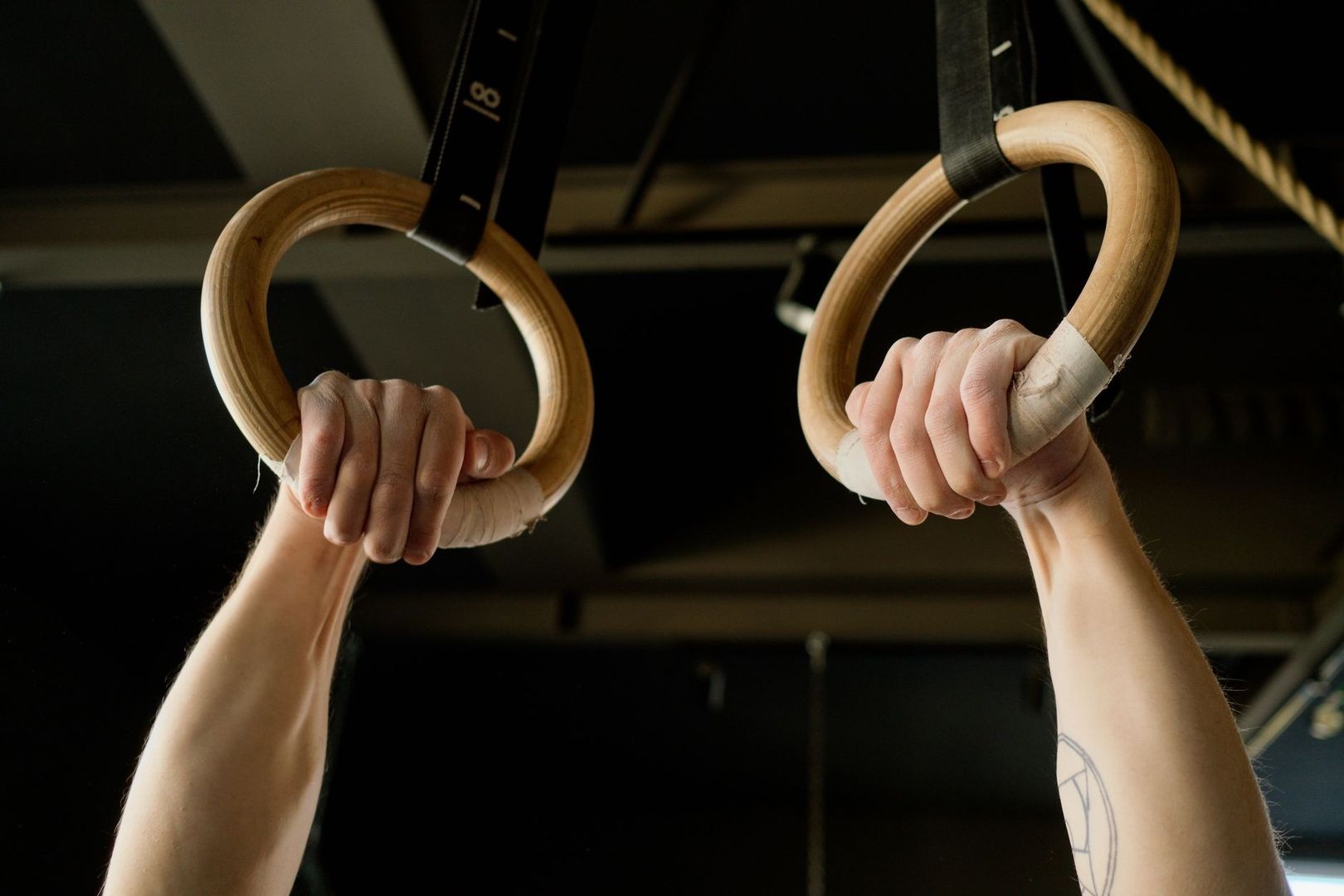
Fix Your Ring Muscle-Up: False Grip Mechanics That Protect Your Wrists and Elbows
Why Your Ring Transition Is Destroying Your Elbows
The ring muscle-up is not a test of how violently an athlete can throw the body over the rings. That common approach, using maximum swing and a desperate pull, hides weak positions until the turnover exposes them. The center of mass must travel from below the rings to above them, which is why the transition is widely considered the most technically demanding part of the movement. A useful overview of the movement”s history and mechanics can be found in this overview of the muscle-up. Pure pulling strength helps, but it cannot replace precise wrist, shoulder, and elbow coordination.
When the turnover is forced, the elbows often flare while the wrists collapse backward. That combination can create a sharp load on the medial elbow, particularly around the common flexor tendon near the medial epicondyle. The problem may begin as irritation during the transition and develop into persistent pain when the same faulty repetition is repeated under fatigue. A strict false grip changes the mechanics. It gives the athlete a stable connection to the rings, keeps the hands prepared to rotate over the apparatus, and allows the shoulders to move forward without making the elbow absorb the entire change in direction.
Anatomy of the False Grip and Connective Tissue Remodeling
A false grip places the wrist in flexion so the lower palm and pisiform region sit directly over the ring rather than allowing the ring to rest only in the palm. The hand should wrap firmly, with the wrist actively curled and the knuckles controlled. This position shortens the distance between the forearm and the ring, making the turnover more efficient. It is not simply a matter of tolerating pressure on the wrist. The goal is to create an active connection that remains stable while the lats, forearms, and trunk transfer force into the rings.
Muscle strength often improves faster than tendon capacity. A few weeks of hard pulling may make the forearm flexors feel stronger, while the connective tissues at the wrist and medial elbow still require gradual exposure to load. No universal timeline guarantees tendon adaptation, so progress should be judged by tolerance, control, and recovery rather than by the calendar. An Authoritative Source can provide broader medical context for how tissues respond to injury and rehabilitation. Repetitive tensile overload without adequate preparation is associated with chronic medial elbow problems, including golfer”s elbow pathology, as described in this clinical reference on medial epicondylitis.
Active wrist flexion is the key distinction. The athlete should feel the forearm working to maintain the shape, not merely allow the wrist to fold under body weight. Passive collapse shifts stress into the joint and concentrates strain near the flexor tendon origin. Useful preparation can include controlled wrist mobility, forearm mobilization, and low-load false-grip practice. Coaches working with adult athletes commonly emphasize scaled gymnastics exposure and deliberate progressions rather than forcing advanced ring skills before the tissues are ready.

- Keep the wrist flexed before loading the rings.
- Maintain a firm hand connection instead of gripping only with the fingers.
- Stop or scale the drill if sharp wrist or medial elbow pain appears.
- Increase duration and volume gradually, never both aggressively in the same session.
The Progressive Loading Ladder for Resilient Wrists
Begin on the floor, where the wrists can be prepared without the full demand of bodyweight suspension. Use gentle wrist circles, palm-supported rocks within a comfortable range, and forearm flexor and extensor movements. Mobility should create usable range, not chase an intense stretch. Follow the mobility work with short active false-grip contractions, pressing the heel of the hand toward the floor while maintaining a controlled wrist curl. This teaches the athlete to own the position before adding external load.
The next step is a feet-assisted false-grip hang. Set the rings low enough that the feet remain on the floor, then lean back while keeping a portion of the bodyweight supported through the legs. Hold the false grip for brief, high-quality intervals. As tolerance improves, reduce assistance or increase the time slightly. False-grip ring rows and low-ring transitions are valuable because they combine tendon exposure with movement-specific control. Bands can also reduce bodyweight demand while allowing the athlete to rehearse the transition without jerking.
Volume must be dosed like strength training, not treated as casual wrist conditioning. A few controlled sets performed well can build capacity; repeated failed attempts create unnecessary microtrauma. Leave several quality repetitions in reserve, rest fully between sets, and schedule recovery before the next demanding false-grip session. Persistent soreness at the wrist or medial elbow is a signal to reduce loading and seek qualified clinical assessment, not a challenge to push through.
- Prepare the wrists and forearms with controlled mobility and activation.
- Perform feet-assisted false-grip holds for short, repeatable intervals.
- Add false-grip rows and low-ring transitions before full bodyweight attempts.
- Progress from thicker band assistance to lighter assistance only when mechanics remain clean.
- Use negatives sparingly, lowering through the transition under control rather than dropping into the bottom.
Mastering the Ring Turnover Without Jerking or Flaring
The transition starts before the athlete reaches the rings. Pull high, aiming the rings toward the sternum while keeping the elbows close to the torso. The rings should stay close to the body rather than drifting forward. When the rings remain near the chest, the shoulders can move over the hands with less disruption. A strong L-sit or slightly raised-leg position during the pull can help maintain trunk control. As the shoulders travel forward, lowering the legs creates a useful counterbalance without relying on a violent kip.
Asymmetric elbow flare is one of the clearest signs that the turnover is being forced. One elbow may open earlier, causing one shoulder to rotate ahead of the other and placing uneven stress through the wrists and medial elbows. Keep the rings at a consistent width and imagine driving both elbows backward at the same rate. The objective is not to pin the elbows unnaturally to the ribs, but to prevent them from escaping wide while the chest approaches the rings.
Use drills that preserve constant wrist flexion as the center of mass moves over the apparatus. Low-ring transitions with the feet assisting can isolate the shoulder shift. High false-grip pulls can teach the elevation needed before the turnover, while slow deep ring dips build the receiving position. Band-assisted muscle-ups are useful when the band reduces enough load to let the athlete practice the complete sequence without snapping through the weakest point. Quality matters more than repetition count. If the wrists open, the elbows flare, or the athlete drops into the dip, the progression is too difficult.
| Technical focus | Common fault | Coaching correction |
|---|---|---|
| Ring path | Rings drift away from the chest | Pull the rings toward the sternum and keep the body tight |
| Elbow position | One or both elbows flare wide | Maintain even elbow travel and reduce assistance if control improves |
| Wrist position | False grip collapses under load | Return to feet-assisted holds and rebuild active wrist flexion |
| Shoulder shift | Athlete stays behind the rings | Move the shoulders forward gradually before pressing into the dip |
A Weekly Protocol for Sustainable Strength and Joint Armor
Place false-grip work early in a session, before fatigue from high-repetition pulling, pushing, or conditioning. Begin with dynamic wrist preparation, then perform a few short activation sets. The intent is to rehearse the connection, not exhaust the forearms. Two or three low-volume exposures per week may be enough for many athletes, especially when ring dips, pull-ups, and other gripping work are already present in the program.
Transition drills should be low-frequency and high-intent. Perform assisted transitions, high pulls, or controlled negatives while every repetition still looks the same. Save demanding metcons for after the technical work, because fatigue encourages wrist collapse and elbow flare. Finish selected sessions with light, controlled eccentric forearm work, such as slow wrist-flexion and wrist-extension lowering. This can support gradual loading of the forearm tissues, but it should remain modest and should not be used to punish painful joints.
- Prepare with wrist mobility, forearm activation, and short false-grip holds.
- Practice three to five technically perfect transition efforts, using assistance as needed.
- Build strict pulling and deep ring-dip strength separately.
- Keep high-repetition kipping work away from irritated wrists or elbows.
- Allow recovery between demanding ring sessions and monitor soreness the next day.
Build Joint Armor Before Chasing Peak Reps
A clean ring muscle-up is earned through mechanical durability, not rushed through by adding more swing. Strong athletes still need time to adapt the wrists, forearm flexors, elbows, and shoulders to the unusual demands of the false grip and turnover. Progressions that begin with mobility, assisted holds, high pulls, deep dips, and controlled transitions create a foundation that can tolerate more advanced work.
With consistent preparation, the turnover becomes less of a collision and more of a coordinated shift. The rings stay close, the wrists remain active, the elbows track evenly, and the shoulders move over the hands under control. Train strict mechanics before adding velocity, and use assistance whenever it preserves the intended positions. Confidence is earned through preparation. The long-term payoff is not merely a higher repetition count, but ring strength that lasts, healthier joints, and a muscle-up that feels deliberate rather than destructive.