

Fixing the Shift: How Unilateral Strength Cleans Up Your Barbell Numbers
Why That Minor Barbell Shift Is Wrecking Your Progress
A heavy squat or deadlift rarely fails without warning. Often, the first sign is a subtle hip shift at the bottom of a squat, a bar that drifts toward one side during a deadlift, or a torso that rotates just enough to make one shoulder lead the pull. The movement may look acceptable at moderate weight, then unravel as load, fatigue, or range of motion increases. That is not simply a cosmetic flaw. It is information about how force is being distributed, a point reinforced by an Authoritative Source.
When one hip, ankle, or trunk side cannot contribute effectively, the body finds another route. Torque may be transferred into the lumbar discs, sacroiliac joints, or hip labrums while the stronger limb takes over the work. A small, consistent shift without pain may reflect individual anatomy and may not require correction, but a shift that worsens with load or fatigue deserves investigation. Unilateral strength work is not lightweight rehabilitation. Applied with intent, it is an aggressive way to expose weak links, rebuild control, and give your bilateral lifts a stronger foundation.
The Anatomy of Bilateral Compensation Under Load
Bilateral exercises can hide meaningful differences between limbs because both legs contribute to the same task. The bar still rises, the repetition still counts, and the stronger side can quietly absorb work that the weaker side cannot produce. This compensation may remain invisible until a sticking point, a heavier attempt, or accumulated fatigue removes the margin for error.
Common drivers include inhibited gluteus maximus recruitment, restricted ankle dorsiflexion, hip mobility differences, pain avoidance, and poor pelvic control. A lifter with limited ankle motion on one side may shift the pelvis to find depth. A lifter with a painful or impinged hip may rotate away from the uncomfortable position. A dormant glute may force the hamstrings, adductors, or spinal erectors to create extension that should be shared by the posterior chain.
The gluteus maximus contributes to hip extension, external rotation, pelvic control, trunk positioning, joint stability, and force production. A detailed clinical commentary on gluteus maximus weakness explains that movement can continue despite poor glute function, but compensation can alter coordination and increase mechanical stress. The practical point is simple: do not label every shift as weakness, and do not assume every weak-looking side needs more weight. Assess range of motion, pain, timing, and control before prescribing more intensity.
- Check whether the shift appears only near maximal loads or also during warm-up sets.
- Compare ankle dorsiflexion, hip rotation, and single-leg balance from side to side.
- Watch whether the pelvis stays level during step-downs, split squats, and single-leg hinges.
- Reduce load or range of motion if compensation appears before the intended muscles can do their job.
The Diagnostic Trio to Clean Up Your Pattern
The goal of the following three movements is not to imitate a competition squat or deadlift with lighter equipment. Each exercise isolates a specific demand that bilateral lifting can conceal. Use controlled tempo, honest range of motion, and loads that allow the pelvis, knee, and trunk to remain organized.
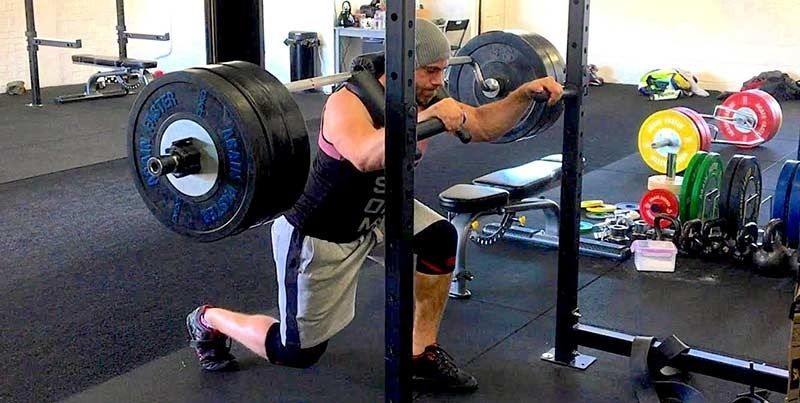
- Bulgarian split squat. Set the rear foot on a low bench and place the front foot far enough forward to allow a full, controlled descent. Keep the front knee tracking over the middle toes, maintain a level pelvis, and avoid collapsing toward the stronger side. The movement reveals knee control, quadriceps dominance, hip stability, and pelvic tilt. Begin with body weight or light dumbbells, then add load only when both sides show comparable depth and tempo.
- Single-leg Romanian deadlift. Stand tall, brace the trunk, and hinge from the hip while the free leg reaches backward. The pelvis should stay square rather than opening toward the ceiling. Hold the load on the stance-leg side to emphasize ipsilateral hinge mechanics, or use contralateral loading when the priority is greater hip and trunk stabilization. Research on single-leg Romanian deadlift variations found high gluteus maximus and biceps femoris activation, with contralateral loading increasing demands on the gluteus medius and trunk stabilizers. Move well before moving fast.
- Single-arm suitcase carry. Hold a kettlebell or dumbbell in one hand and walk while resisting side bending and rotation. Keep the ribs stacked over the pelvis, shoulders level, and steps quiet. This trains anti-lateral flexion while teaching the trunk to transfer force without twisting. If the torso leans immediately, the load is too heavy or the distance is too long. Anti-rotation training principles are also addressed in this authoritative review of trunk stability demands.
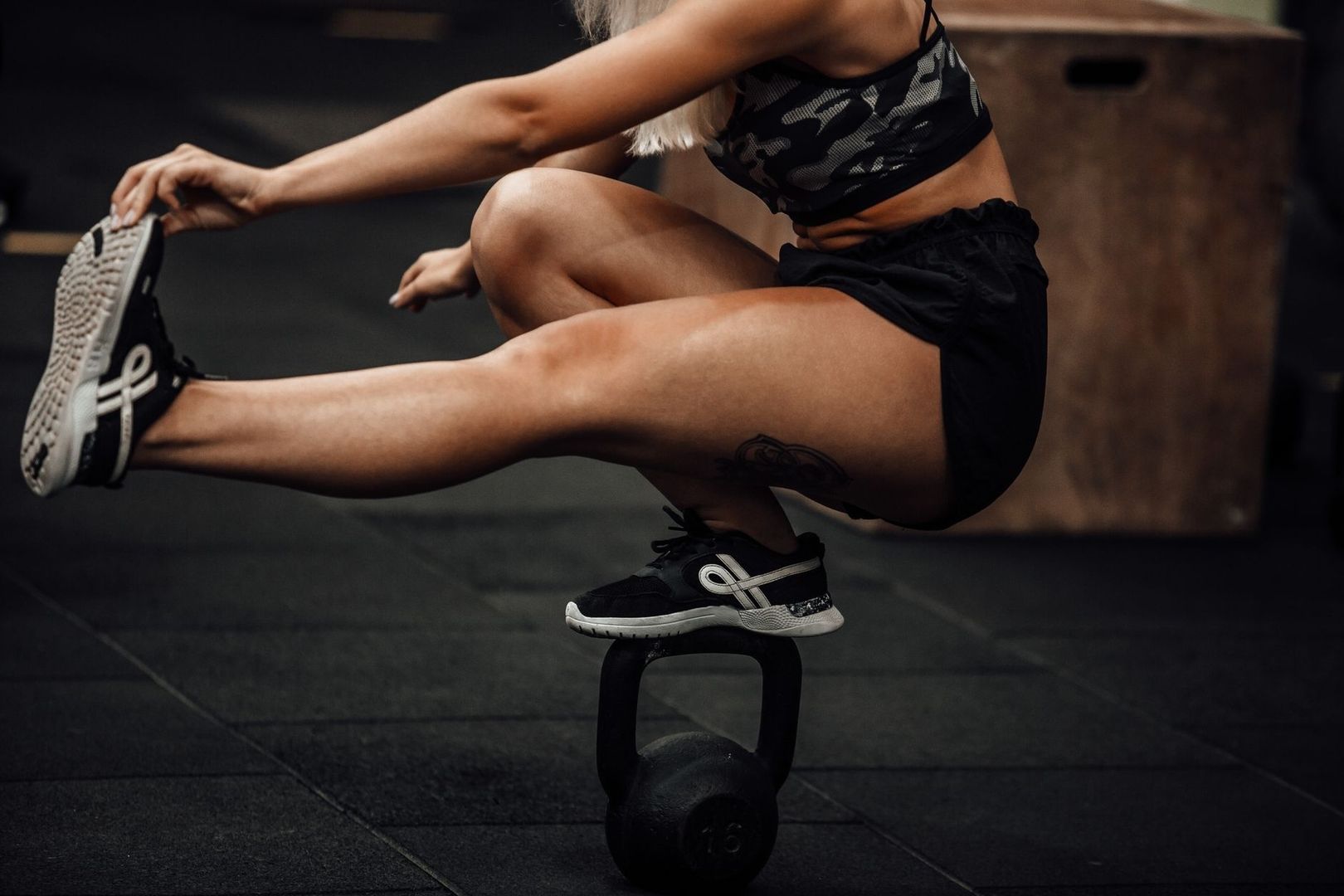
These drills should feel demanding without becoming sloppy. A split squat that turns into a pelvic rotation, a Romanian deadlift that becomes a reach toward the floor, or a carry that produces a visible side bend is no longer diagnosing the target limitation. End the set when alignment fails. Quality is not a softer version of training; it is the method that makes heavier training possible later.
Unilateral Versus Bilateral Loading Dynamics
Bilateral lifts remain essential for maximal squat and deadlift strength because they allow high external loading and closely match the competitive task. Unilateral exercises add a different stimulus. They increase the stability demand of the stance leg, reduce the ability of one limb to hide behind the other, and challenge the trunk to manage rotation and lateral flexion. Neither category replaces the other. The strongest program uses each for the adaptation it can produce best.
| Training feature | Bilateral loading | Unilateral loading |
|---|---|---|
| Primary strength expression | High absolute force in a shared base | Independent limb force and control |
| Stability demand | Lower side-to-side challenge, higher total load | Greater hip, ankle, pelvic, and trunk control |
| Compensation risk | Stronger side can conceal weaker side | Each side must manage its own work |
| Spinal demand | Often greater absolute axial and compressive loading | Usually lower total load, with greater anti-rotation demands |
| Best use | Building bilateral maximal strength | Exposing deficits and improving single-limb capacity |
Evidence supports specificity rather than simplistic claims that one approach always wins. A systematic review and meta-analysis found that bilateral training offered a small advantage for bilateral strength, while unilateral training had a large advantage for unilateral jump performance. Another meta-analysis reported benefits from unilateral training across several athletic qualities, although outcome significance varied between measures. Clinical and performance reviews consistently demonstrate that unilateral training can transfer to bilateral force production when programmed systematically, especially when it reduces a clear limb deficit rather than replacing heavy bilateral practice.
A 10-week proof-of-concept study in university basketball players provides a useful model. The unilateral group assigned greater volume to the non-dominant leg, reduced single-leg jump asymmetries, improved isometric pulling measures, and outperformed the control group on several jump and squat outcomes. The study does not prove that every powerlifter should overload the weaker side indefinitely. It does show why targeted unilateral compounds can clean up asymmetry while supporting broader performance.
A Coach-Led Accessory Integration Framework
Accessory work should support the primary lift, not sabotage it. Place the most technical unilateral exercise after the main squat or deadlift, when the athlete is warm but not exhausted. Use two or three movements per lower-body session, generally for two to four sets. Moderate rep ranges work well because they provide enough practice without turning every accessory into a fatigue contest.
- Bulgarian split squat: 3 sets of 6 to 10 repetitions per side, using a two- to three-second descent.
- Single-leg Romanian deadlift: 2 to 4 sets of 6 to 8 repetitions per side, with a brief pause near the end of the hinge.
- Suitcase carry: 3 to 5 carries of 20 to 40 meters per side, maintaining a level torso.
- Loading rule: match the weaker side rather than letting the stronger side dictate the weight or repetitions.
A practical four-week progression begins with control. During week one, use body weight or light external loading and record depth, balance, and trunk position. In week two, add repetitions or a small load increase while preserving the same tempo. In week three, progress the weaker side with one additional set only if technique remains equal; do not turn the difference into reckless volume. In week four, reduce accessory volume by roughly one-third while using slightly heavier, crisp repetitions, then reassess the bilateral squat and deadlift pattern.
Use contralateral and ipsilateral loading for different reasons. Ipsilateral loading can reinforce the relationship between the stance leg and same-side hip musculature during a hinge. Contralateral loading often increases the demand on the gluteus medius, obliques, and erector spinae as the body resists rotation. Neither is automatically superior. Choose the variation that exposes the specific fault, then progress it slowly enough that the nervous system learns the desired strategy.
Self-coaching requires objective cues. Film the final repetitions from the front and side, compare bar path, and note whether the pelvis shifts before the sticking point. Ask whether pressure stays distributed through the entire foot, whether the knee tracks over the toes, and whether the ribs remain stacked over the pelvis. If pain, pinching, numbness, or a rapidly worsening shift appears, stop treating the issue as a simple strength imbalance and seek qualified clinical assessment. Confidence is earned through preparation, not by forcing a pattern that the body cannot control.
Build Unshakable Symmetry and Own Your Platform Numbers
Balanced limbs do more than improve appearance. They distribute force across the hips, knees, ankles, pelvis, and trunk so that heavy repetitions rely less on passive structures and more on active muscular control. That supports joint longevity, cleaner technique, and a more repeatable expression of strength. A bilateral lift can remain the centerpiece while unilateral work removes the compensation that has been limiting it.
At the next lower-body session, film a moderate squat set and a moderate deadlift set from the front. Identify the first point where the pelvis or bar begins to drift, then perform two controlled sets of split squats, two sets of single-leg Romanian deadlifts, and three short suitcase carries per side. Keep the load conservative, match the weaker side, and repeat the same assessment four weeks later. Train with purpose, move well before moving fast, and let consistency beat random intensity.
