

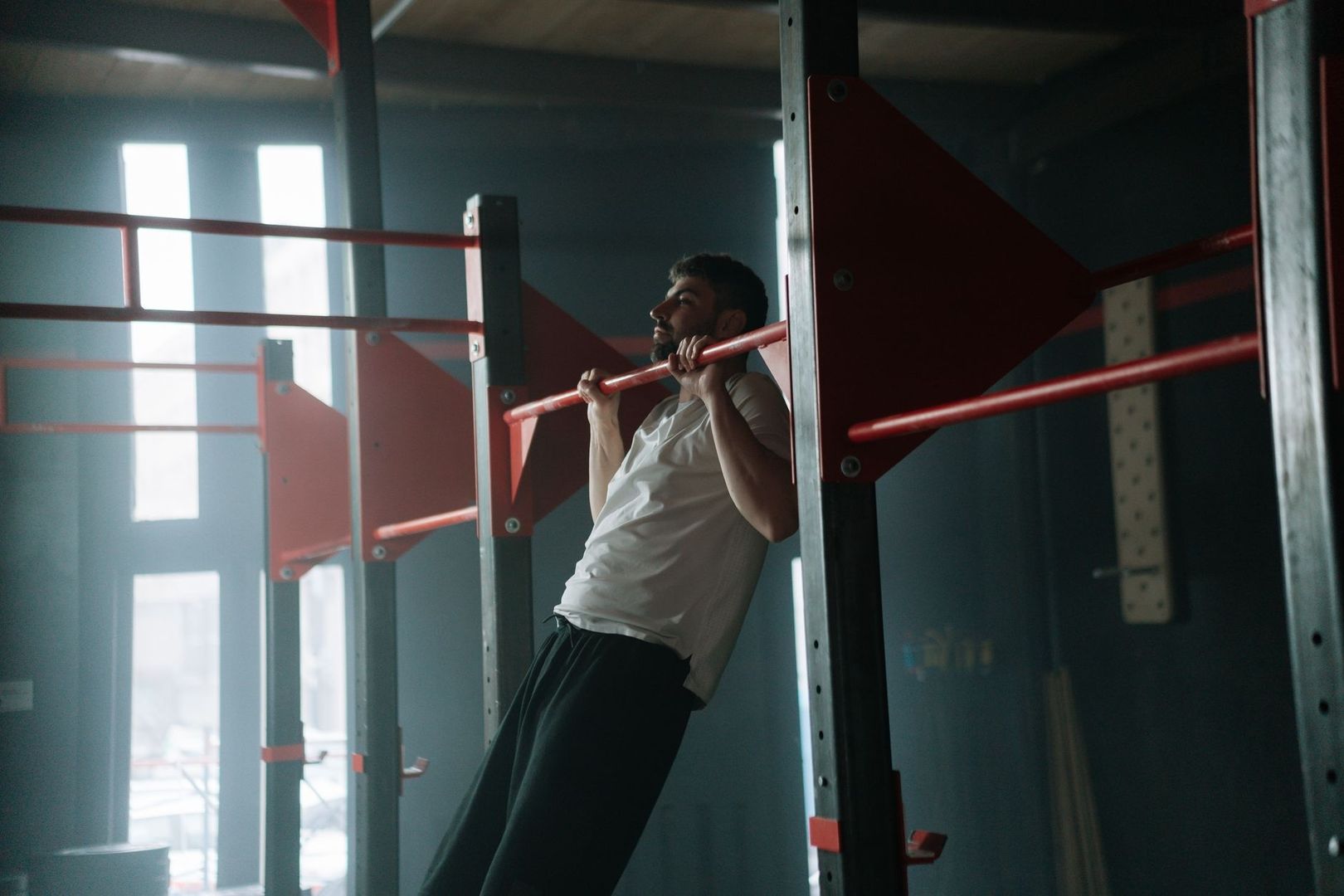
Before You Kip: Why Strict Strength Protects Your Shoulders and How to Build It
The True Cost of Skipping Your Gymnastic Foundations
High-intensity fitness rewards visible progress. More reps, faster times, and unbroken sets create an easy scoreboard, so athletes often rush toward kipping pull-ups before earning the strength and control required to use them well. The bar becomes a target, the clock becomes the judge, and strict work gets treated as a slower version of the “real” movement. That approach builds performance on a weak foundation.
Kipping is not simply an easier way to get the chin over the bar. It is an advanced technique that uses coordinated momentum to multiply power and increase repetition speed. That power travels through the hands, elbows, shoulder complex, trunk, and hips. Without strict pulling strength, active scapular control, and a reliable midline, the shoulder is forced to absorb forces it cannot consistently manage. Athletes who want durable gymnastics should master strict movement first, then add speed as a skill. Move well before moving fast, because confidence is earned through preparation.
The Biomechanics of the Kip and Why Tendons Bear the Brunt
A strict pull-up distributes demand through a controlled concentric phase as the athlete pulls the body upward, followed by an eccentric phase as the athlete lowers under control. The shoulder blades remain organized, the trunk stays relatively stable, and the muscles can manage the load through a predictable range of motion. A kip changes the equation. The athlete swings between an arched position and a hollow position, then redirects that momentum into the next repetition.
That redirection creates a rapid shock-absorption problem. The rotator cuff must center the humeral head, the scapular stabilizers must guide the shoulder blade, and the long head of the biceps contributes to shoulder stability as the arm moves overhead. The labrum, joint capsule, tendons, and ligaments may also experience substantial stress when the shoulder reaches the back end of the arch or catches the body as momentum changes direction. A review of upper-extremity injuries in CrossFit athletes found that the shoulder accounts for roughly 19 to 39 percent of reported injuries, with kipping pull-ups and other high-repetition gymnastics movements among the commonly implicated exercises. The evidence base has limitations, but the pattern deserves respect. Read the full review of CrossFit upper-extremity injuries for the broader context.
Mobility determines whether the kip distributes force through the intended positions or dumps it into vulnerable structures. Limited thoracic extension, restricted shoulder flexion, and poor shoulder extension can prevent the athlete from moving the head through the arms or creating a smooth connection between the hips and the bar. Instead of a controlled arc, the athlete may force the shoulders into an aggressive end range. The result can resemble impingement, irritation, or instability rather than efficient gymnastics. Useful coaching priorities include:
- Maintain an active shoulder rather than hanging passively into the joint capsule.
- Use a grip width that permits a clean overhead path without forcing excessive shoulder rotation.
- Keep the ribs and pelvis organized so the trunk transfers force instead of leaking it.
- Build mobility gradually with controlled drills, not aggressive stretching immediately before high-volume kipping.
- Stop a set when the kip becomes a loose swing, a painful catch, or a repeated loss of body position.
Connective tissue adapts more slowly than cardiovascular fitness. A fresh athlete may complete a large set of kipping repetitions because the lungs and grip can tolerate the pace, while the tendons and joint structures are quietly accumulating stress. That is why the first signs of trouble may appear after training, during sleep, or on the next pressing day rather than during the workout itself. Kipping does not inherently ruin healthy shoulders, but poor preparation, excessive volume, and repeated movement faults can turn a useful power technique into a high-cost habit.
Non-Negotiable Benchmarks to Clear Before Leaving Strict Work Behind
Readiness is not determined by whether the chin can occasionally reach the bar. It is determined by whether the athlete can repeatedly control the shoulder and trunk through the positions that kipping amplifies. The exact standard should be individualized for body size, training age, injury history, and coaching context, but clear benchmarks provide a useful starting point. An athlete who cannot control a strict repetition has limited ability to control momentum-driven repetitions.
| Test | Practical target | Why it matters |
|---|---|---|
| Strict dead-hang pull-ups | At least 5 clean consecutive reps before regular kipping practice | Demonstrates baseline vertical pulling strength and control through the full range |
| Strict pull-up eccentric | Three to five descents lasting 5 seconds | Builds tolerance to the lowering forces that often challenge the shoulder and elbow |
| Active hang | Three sets of 20 to 30 seconds without shrugging or rib flare | Shows the athlete can stabilize the scapula under suspended bodyweight |
| Hollow body hold | 20 to 30 seconds with the lower back maintained against the floor | Confirms midline control needed to transfer force between the hips and the bar |
| Arch body hold | 20 to 30 seconds with deliberate tension rather than lumbar collapse | Develops the opposing shape used to create a controlled kip |
| Strict chest-to-bar pull-up | Several controlled repetitions, scaled as needed | Expands pulling range and reduces dependence on momentum at the top |
A passive hang is useful for grip exposure and general tolerance, but it is not the same as an active hang. In a passive hang, the shoulders may rise toward the ears while the body settles into the joint capsule. An active hang requires gentle scapular depression and retraction, a braced trunk, and continuous awareness of the shoulder position. That active engagement gives the muscles a role in stabilizing the joint rather than asking passive tissues to absorb the entire load.
Five strict pull-ups are a sensible minimum for many athletes before introducing controlled kipping work, while eight or more strict repetitions and reliable hollow and arch mechanics are a stronger starting point for butterfly progressions. These numbers are not a license to ignore quality. Every repetition should begin from a controlled hang, avoid excessive swinging, and finish without craning the neck or losing the rib-to-pelvis relationship. Bands can help develop volume, but they should supplement rather than replace the ability to perform unassisted dead-hang repetitions. Strict capacity is the foundation; the kip is the performance layer.
Four Practical Progressions for Bulletproof Scapular and Pulling Strength
Progressions should make the desired movement more understandable and more controllable. The goal is not to fatigue the shoulders with random accessory work. The goal is to strengthen the positions that protect the joint and allow force to move efficiently from the floor to the bar.
- Active bar hangs. Begin with a comfortable overhand grip and a neutral trunk. From a passive hang, pull the shoulder blades down and slightly back without bending the elbows, then return under control. Hold the active position for 5 to 10 seconds or perform small, deliberate repetitions. Keep the ribs from flaring and avoid turning the drill into a shrug. Progress by increasing hold duration, adding controlled scapular pull-ups, or placing the feet on a box for partial assistance. This work reinforces bottom-end stability, where a poorly organized kip often begins.
- Tempo eccentric lowers. Use a box or small jump to start with the chin over the bar. Lower for a counted five seconds, keeping the shoulders connected and the trunk controlled. Step back to the box rather than dropping from the bottom. Perform three to five repetitions for three or four sets, with enough rest to preserve the quality of each descent. Eccentric strength improves awareness and tendon resilience, but the elbows and shoulders still need recovery. If the final seconds become a free fall, reduce the range, use assistance, or shorten the set.
- Hollow and arch holds. Practice these shapes on the floor before asking the rig to provide feedback at speed. In the hollow position, press the lower back into the floor, keep the ribs down, and extend the limbs only as far as that contact can be maintained. A bent-knee version is often the correct starting point. For the arch position, create tension through the glutes, back, and shoulders without collapsing into the lumbar spine. Add controlled rocks only after the static shapes are reliable. Quality hollow-body practice develops whole-trunk bracing rather than isolated abdominal fatigue, as explained in this hollow body tutorial.
- Chest-to-bar inverted rows. Set a bar at a height that allows a full range of motion without losing control. Pull the chest toward the bar while keeping the body in one straight line, then lower slowly. Adjust difficulty by changing the bar height or foot position. Pause at the top to strengthen horizontal retraction, rear-deltoid engagement, and upper-back thickness. Inverted rows balance the heavy vertical pulling emphasis common in gymnastics training and help athletes feel what a strong shoulder blade position should be.
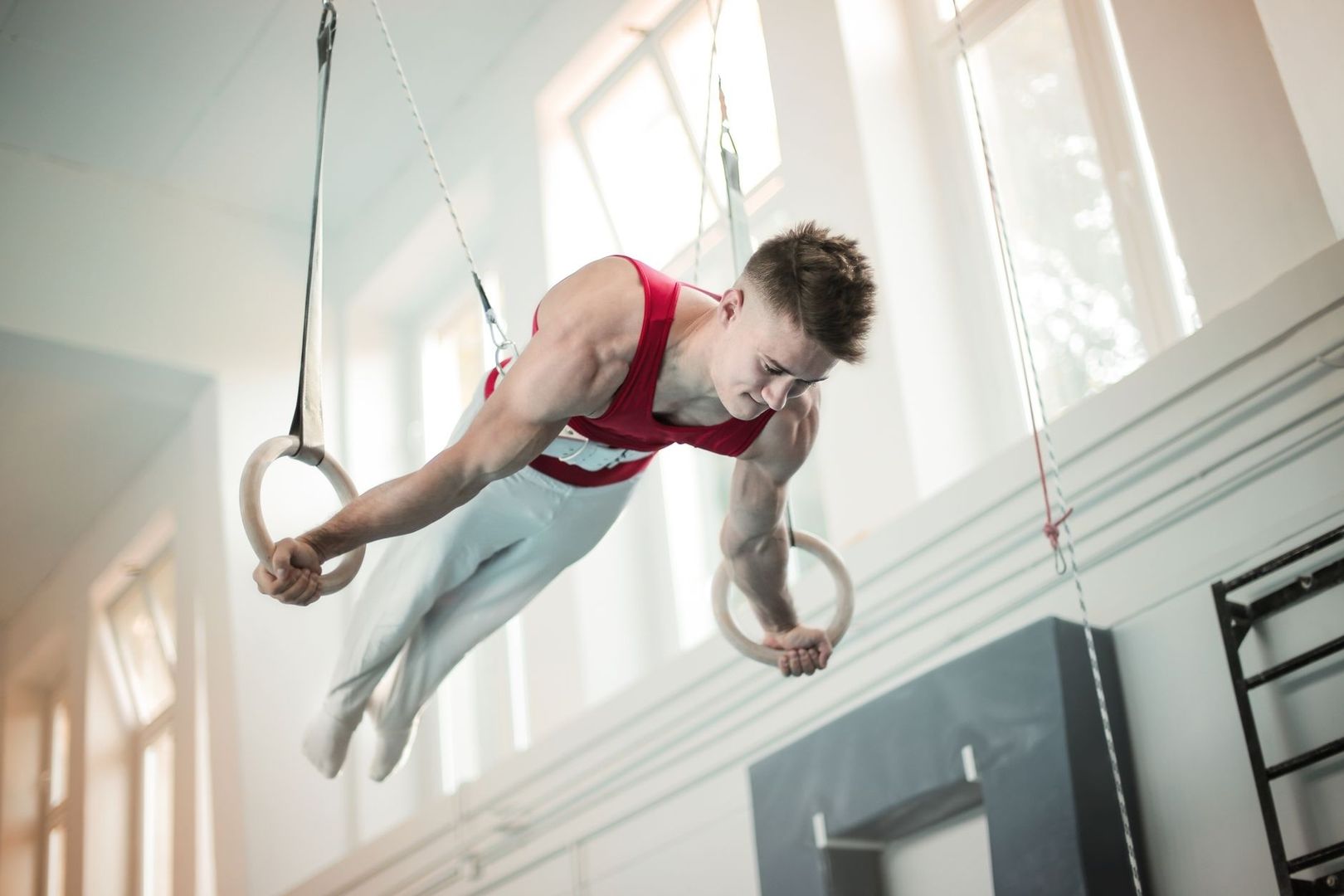
Each progression should be coached with the same standard used for a pull-up: active shoulders, controlled breathing, and no compensation that hides a weak position. Two or three movements can be paired in a short accessory circuit, but maximal effort is not required. Leave repetitions in reserve and aim for consistent practice. A shoulder that feels better after the session than before it is receiving the right training signal.
Mobility belongs in this process as well. Thoracic rotations, controlled shoulder circles, banded external rotations, and gradual overhead drills can improve access to the positions required for sound gymnastics. Mobility should be paired with strength so the athlete can own the available range. A new range that cannot be stabilized is not yet useful performance capacity.
How to Program Strict Development Alongside Metcons
Strict strength is a skill, so it should be trained when attention and coordination are available. Place it early in the session after a thorough warm-up, or use a dedicated accessory block before the metabolic conditioning begins. Avoid testing strict pull-ups immediately after a high-repetition workout that has already exhausted the grip, elbows, and shoulder stabilizers. Fatigue changes mechanics, and a movement intended to build capacity can become a practice session for compensation.
- Perform strict strength in low to moderate sets, stopping before technique deteriorates.
- Scale the workout gymnastics volume with ring rows, jumping repetitions, controlled negatives, or reduced rounds.
- Replace high-repetition kipping with strict singles or small clusters when shoulder control is the limiting factor.
- Separate hard pulling sessions by at least 48 hours when the athlete is accumulating substantial volume.
- Track soreness, grip fatigue, elbow irritation, and sleep quality rather than judging recovery only by motivation.
- Increase either intensity or volume at a time, not both during the same progression.
For example, an athlete developing strict capacity might complete five sets of three strict pull-ups, followed by three sets of controlled eccentrics, two or three times per week. In a metcon that calls for 30 kipping pull-ups, the same athlete may use 30 ring rows or 15 controlled jumping pull-ups with a slow lower. The intent of the workout can remain intact while the joints receive a manageable dose. High weekly volume, repetitive activity, prior injury, and rushed technique are recognized risk factors in the current injury literature, so smart scaling is not a reduction in ambition. It is how ambition survives long enough to produce results.
Own the Movement Before Demanding Speed From the Joint
Strict competence is the real marker of an advanced gymnastics athlete. The ability to perform a slow pull-up, hold an active hang, control a five-second negative, and maintain hollow and arch positions shows that the athlete owns the movement rather than borrowing momentum to hide a gap. That standard may feel less exciting than an unbroken set, but it creates the physical reserve that makes dynamic repetitions safer, faster, and more repeatable.
Take the next eight weeks as a focused foundation block. Test the benchmarks honestly, train strict pulling two or three times each week, practice hollow and arch mechanics, and scale metcon gymnastics before fatigue turns technique into survival. Log clean repetitions, not merely completed repetitions. The kip should eventually multiply strength that already exists, not substitute for it. Build capacity that lasts, and speed will have a stronger joint to travel through.